Table of contents
Souvenir inflation is real, and so is the backlash, as more travellers quietly ditch the checklist, skip the “top 10” sprint, and look for something that feels less like content and more like a lived day. The shift is visible in the numbers, too, with tourism boards from Lisbon to Dubrovnik pushing dispersal strategies and small-group experiences to relieve pressure on city centres, and with booking data showing rising demand for guided, hands-on activities. The payoff is not abstract: it rewires what you remember, and why.
When “doing” beats “seeing”, memory changes
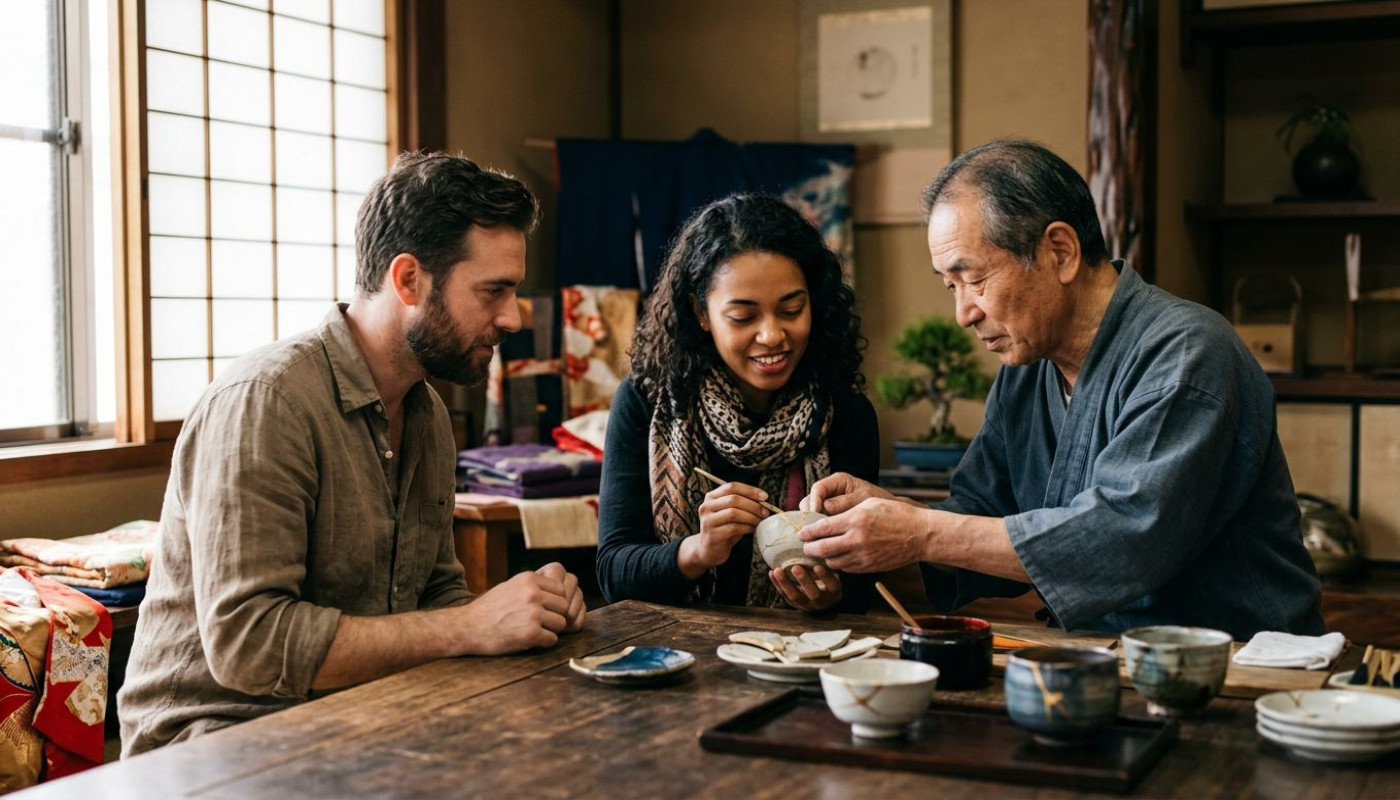
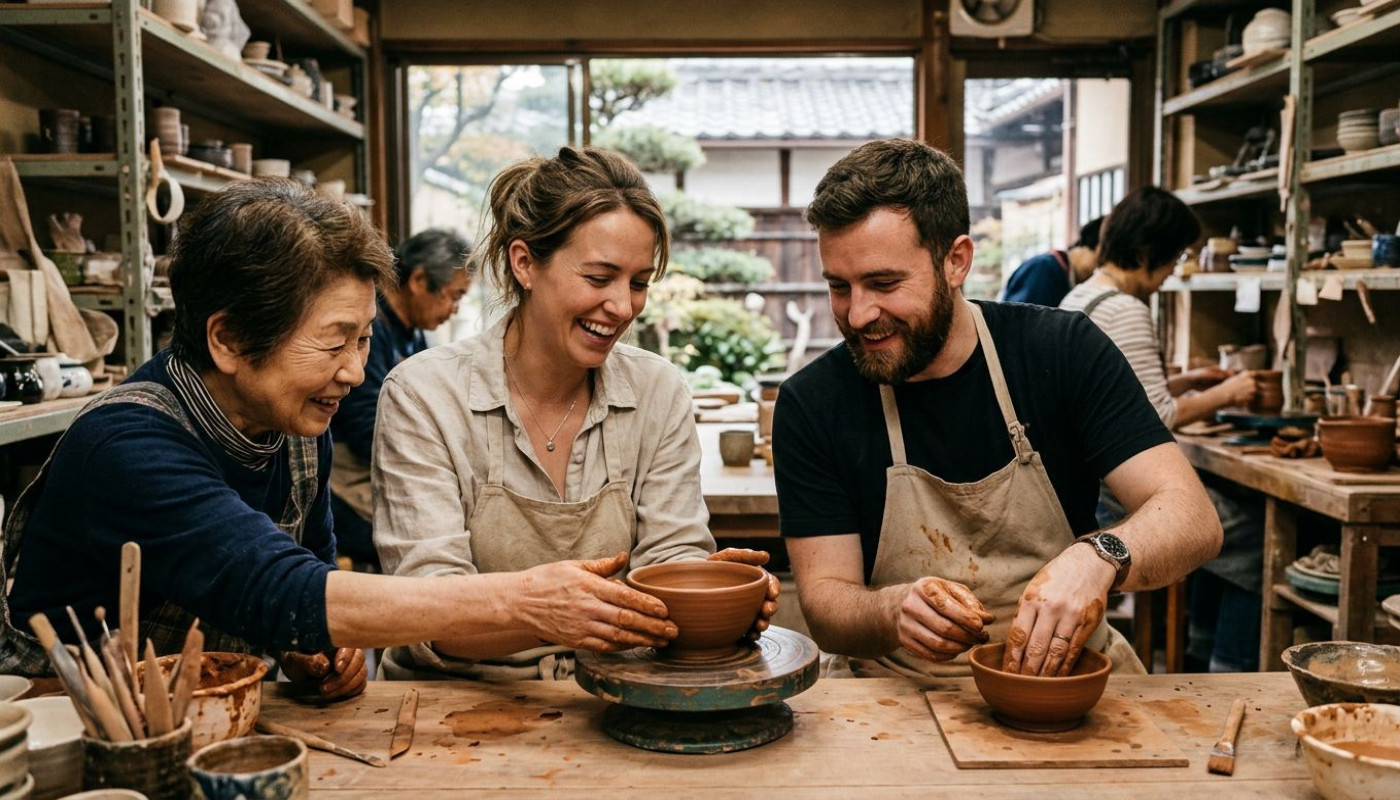
Who really remembers the tenth cathedral? Cognitive psychology has a blunt answer: novelty, emotion, and participation are the ingredients that make memories stick, and passive sightseeing often dilutes all three. Experiential learning research has long shown that active involvement improves recall, and tourism studies echo it, linking hands-on activities to stronger “autobiographical memory”, the kind that returns years later with smells, sounds, and a clear sense of self in the scene. In practice, that can be as simple as learning a local recipe, joining a community walk, or trying a craft where your imperfect attempt becomes the story.
The travel industry has been measuring this shift through behaviour. A 2023 report from Skift described experiences as one of the strongest post-pandemic drivers, and Expedia’s annual trend outlooks have repeatedly highlighted travellers prioritising “meaningful” itineraries over pure landmark collecting. Even in Europe’s most saturated destinations, the same pattern appears: visitors still want the classics, yet they increasingly anchor their days around one activity that forces them to slow down, talk to people, and take a small risk, whether social or physical. That risk is the point; neuroscientists associate moderate arousal with better memory consolidation, and the micro-stress of trying something new often turns into the punchline you retell later.
There is also a social dimension that rarely makes brochures. When you sit in a small group, you negotiate space, you exchange advice, you laugh at small mishaps, and you start attaching faces and voices to a place, not just façades. Researchers studying “place attachment” in tourism note that interactions with residents and everyday settings deepen emotional bonds, and those bonds, in turn, shape the narrative you build when you return home. A city becomes “where I got lost with that retired teacher who showed me the market” rather than “where I took the same photo as everyone else”.
For travellers who fear missing out, the irony is comforting: doing less can mean remembering more. A single afternoon that demands attention often outperforms a full day of rushing, and attention is the scarce commodity that modern travel quietly erodes, with constant navigation, notifications, and the pressure to document. Local activities work as a built-in brake; they give your brain a defined container, a beginning and an end, and a human thread that holds the day together.
Local activities are the antidote to overtourism
Can a cooking class really matter in the big picture? In destinations grappling with overtourism, yes, because the mechanics of crowding are painfully simple: too many people concentrate in too few streets at the same time. European cities have responded with a mix of regulation and persuasion, and the best-known examples are now mainstream, from Venice’s day-tripper fee and visitor management to Amsterdam’s campaigns aimed at steering certain travellers away. Along the Adriatic, Croatia has faced the same pressure, with Dubrovnik becoming an emblem after the late 2010s surge, and with local authorities working on timed entries, port call management, and dispersal beyond the old town.
Dispersal is where local activities become more than a personal choice. When travellers book something rooted in neighbourhood life, or head inland for a workshop rather than staying on the same waterfront loop, they redistribute spending and footfall. That is not just theory; the OECD and the UN World Tourism Organization have both emphasised, in various policy briefs, that spreading visitors across regions and seasons is central to sustainability. The EU’s own sustainability frameworks for tourism also keep returning to the same idea: encourage longer stays, deeper engagement, and local supply chains.
On the ground, local activities tend to favour smaller groups, fixed time slots, and predictable flows, which makes them easier to manage than unstructured crowds. They also support micro-businesses that often struggle to benefit from mass tourism, where the biggest gains can leak to international platforms, large tour operators, or central hotel clusters. A guide who runs a heritage walk, a family who hosts a tastings session, or a cooperative selling crafts captures revenue more directly, and those euros are more likely to circulate locally through wages and suppliers.
There is a second, quieter benefit: local activities change visitor behaviour even outside the activity itself. When you spend time with someone who lives there, you pick up informal norms, where to stand, when to lower your voice, how to queue, what “respect” looks like in that particular place. Studies on responsible tourism repeatedly point to education and contact as the most reliable drivers of respectful conduct, and it is hard to educate at scale with signage alone. A conversation does what a poster cannot; it turns rules into reasons.
None of this requires travellers to shoulder guilt. It is simply a better design for a trip, one that aligns personal enjoyment with a destination’s capacity, and that is why tourism boards increasingly market experiences, not just monuments. The photos still happen, yet they become souvenirs of a day that made sense, not proof that you were there.
In Croatia, the inland story surprises first-timers
Think Croatia is only coastline? The country’s tourism image is still dominated by the Adriatic, and the numbers explain why: coastal counties capture the lion’s share of overnight stays in most recent pre- and post-pandemic seasons, while inland regions fight for attention despite having strong food traditions, wine routes, and protected landscapes. Yet that imbalance is precisely what makes inland activities so effective for reshaping a trip; they reveal a Croatia that many visitors did not know they were missing, and they relieve pressure on hotspots that have become strained in peak summer.
The menu of possibilities is broader than the stereotype. In Istria, travellers are drawn to olive oil tastings, truffle hunts, and hilltop villages where the pace is closer to Italy’s interior than to a party beach. In Slavonia and Baranja, the experience is different again, with river landscapes, paprika-heavy cuisine, and folk traditions that feel underrepresented in the international spotlight. In the central highlands, national parks and smaller trails offer a counterpoint to crowded coastal promenades, and the logic is straightforward: you trade a packed viewpoint for space, and you trade a rushed schedule for a day that has texture.
Local activity providers also help visitors navigate a language and logistics barrier that can deter exploration beyond major hubs. Public transport is improving in places, yet it is not always intuitive for short stays, and the friction nudges people back toward the obvious. Curated activities, whether they are day trips, workshops, or guided tastings, reduce that friction, and they make “inland Croatia” accessible without demanding that travellers become instant experts in bus timetables and rural routing.
It is also where the strongest stories emerge. Coastal towns can feel like a stage set in high season, spectacular but slightly detached from everyday life, whereas small inland experiences often keep the daily rhythm visible. You might see where ingredients come from, hear how families balance tourism with agriculture, or learn why certain dishes are tied to religious calendars and local history. Those details travel home with you, and they shift the way you talk about the destination; Croatia becomes plural, not postcard-flat.
For readers planning a trip and trying to find activities that go beyond the obvious, a useful starting point is a curated hub that focuses on local experiences across regions, such as https://www.croatia-spirit.com/, because browsing by theme and location makes it easier to build an itinerary that mixes highlights with the kind of small, participatory moments that tend to endure in memory.
How to build a trip around participation
What if your itinerary had a backbone? The simplest method is to anchor each travel day around one participatory activity, then let the rest of the day breathe around it. That structure protects time for unplanned discoveries, and it prevents the common mistake of stacking too many “must-sees” until the trip becomes a moving queue. Travel researchers studying satisfaction often find that perceived crowding and time pressure reduce enjoyment more than the absence of one extra attraction, and anchoring your day is a practical way to reduce both.
Start with sequencing. Put the activity early when possible, because energy and attention are higher, then use the afternoon for walking and museums at your own pace. If your activity involves food or drink, plan lighter meals around it, and if it involves physical exertion, plan recovery time; it sounds obvious, yet many travellers overbook because they underestimate how much a hands-on experience engages the body and the mind. The goal is not efficiency, it is absorption.
Then match the activity to the place. A sailing lesson makes sense on the coast, but a craft workshop might be better inland, and a market tour matters most where people still shop daily rather than where a market is mainly for visitors. Ask one decisive question before booking: “Will I meet locals in a setting they actually use?” If the answer is yes, you are more likely to come away with the kind of grounded memory that resists cliché.
Budgeting is equally practical. Experiences can look expensive compared with “free” wandering, yet they often replace multiple small expenses, and they can be the best value part of a trip when they include ingredients, equipment, transport, or expertise. In Croatia, prices vary sharply by season and location, with peak summer coastal activities commanding a premium, while shoulder-season inland options can be significantly cheaper, and frequently more comfortable in terms of weather and crowds. Booking a little ahead helps in July and August, but last-minute flexibility can pay off in May, June, September, and October.
Finally, leave space for repetition. The travel industry sells novelty, yet memory thrives on familiarity, too, especially when you return to the same café, the same beach, or the same evening walk after your activity. That repetition creates a personal map, and it is often what turns a destination from “a place I visited” into “a place I knew for a week”. Participation gives you the first thread; returning to it ties the knot.
Before You Book, Do This
Reserve one or two key activities first, then build transport and accommodation around them, and keep 10% of your budget for spontaneous add-ons once you arrive. Check local or national tourism discounts and seasonal offers, and ask about small-group rates. If you travel in peak weeks, book early; if not, stay flexible and compare options.
On the same subject