Table of contents
Travel is having a quiet reckoning, and it is not just about flight shame or overtourism. After years of checklist tourism, more travelers are asking a sharper question: what does it take to feel genuinely connected to a place, not merely entertained by it? Recent industry surveys point to a sustained rise in “local-led” experiences, smaller groups, and culture-first itineraries, as cities from Barcelona to Venice tighten rules on crowd-heavy tourism. The shift is reshaping activities on the ground, and it is pushing operators, hosts, and visitors to rethink what “doing” a destination really means.
From sightseeing to belonging, what changed?
Something has cracked in the old promise of travel: see more, faster, cheaper. The post-pandemic rebound delivered huge volumes back to major cities, yet it also exposed how thin many experiences feel when they are designed for throughput rather than meaning, and that tension now shows up in traveler behavior and in hard numbers. Booking.com’s 2024 Travel Predictions reported that a large share of respondents wanted trips that feel more “authentic” and connected to local culture, and Skift has repeatedly highlighted the growth of “experiential travel” as a durable demand trend rather than a fad. Meanwhile, destinations are reacting to pressure on housing and public space, with short-term rental rules, timed entry systems, and group-size limits becoming more common, all of which pushes visitors away from the biggest funnels and toward more curated, smaller-scale activities.
The deeper shift is psychological. Travelers are increasingly fluent in the idea that a place is not a backdrop; it is a living community with rhythms, constraints, and sensitivities, and a meaningful activity should respect that reality. This is why museums are expanding behind-the-scenes programming, why cooking classes are moving from staged studio kitchens into real homes, and why walking tours that once fixated on landmarks now spend time on everyday life, wages, migration, and the politics of public space. In the same way that restaurants moved from “fusion” gimmicks to ingredient provenance, travel activities are moving from spectacle to context, and they are beginning to reward curiosity, patience, and conversation.
That does not mean the end of fun or comfort. It means a recalibration of what counts as value. A 90-minute bus loop can be “efficient,” but it rarely produces the kind of memory people describe as transformative. By contrast, an activity built around a local guide’s lived experience, or around a craft that requires your hands and attention, can create a sense of belonging even on a short break. The new currency is not the number of stops; it is the density of insight, the quality of human contact, and the feeling that you were invited into something real rather than steered through a product.
Small groups, big impact on the ground
Here is the part the glossy brochures rarely say: group size is not just a comfort issue, it changes the ethics and the economics of an experience. Smaller groups tend to disperse spending more evenly, reduce friction in residential neighborhoods, and make it easier for a guide to adapt to what participants actually care about, whether that is architecture, food systems, or the social history behind a district’s gentrification. It also tends to improve safety and accessibility, because a guide can notice when someone is struggling with pace, heat, stairs, or sensory overload. As more cities debate capacity, these micro-level dynamics are becoming macro policy concerns.
Economically, small-group models can be healthier for local talent, but only if pricing is honest. A bargain-basement tour often signals that the guide is underpaid, that the route will be engineered around commissions, or that the group will be pushed through partner shops that have little cultural value. By contrast, fairly priced, limited-capacity activities can support professional guiding, translation work, research time, and liability coverage, which are all invisible to visitors but crucial to quality. In many European cities, licensed guides must meet training requirements, and the difference shows when the story is not a script but a documented narrative that can answer follow-up questions without resorting to clichés.
There is also a cultural reason small groups matter: they allow for reciprocity. When participants can ask questions without feeling they are holding up a crowd, the exchange becomes two-way, and the local expert can correct stereotypes in real time. That might mean talking about how a neighborhood actually votes, what locals think of new development, or why a particular tradition is controversial inside the country even if it looks picturesque to outsiders. These are the conversations that create deeper cultural connection, and they are almost impossible to have when you are wearing a sticker and following a raised umbrella through traffic.
The new activity: listen first, then act
Want a simple test for whether an activity is culture-first? It starts by listening, not consuming. The best experiences increasingly build in context at the beginning, explaining what you are about to see, who it affects, and what respectful behavior looks like. That can be as practical as guidance on dress codes in religious sites, photography etiquette in markets, and noise levels in residential stairwells, but it can also be more substantive: a brief on local history that acknowledges complexity, and that avoids turning living communities into museum exhibits. When an activity leads with this kind of framing, it signals that the organizer is not just selling access, they are stewarding relationships.
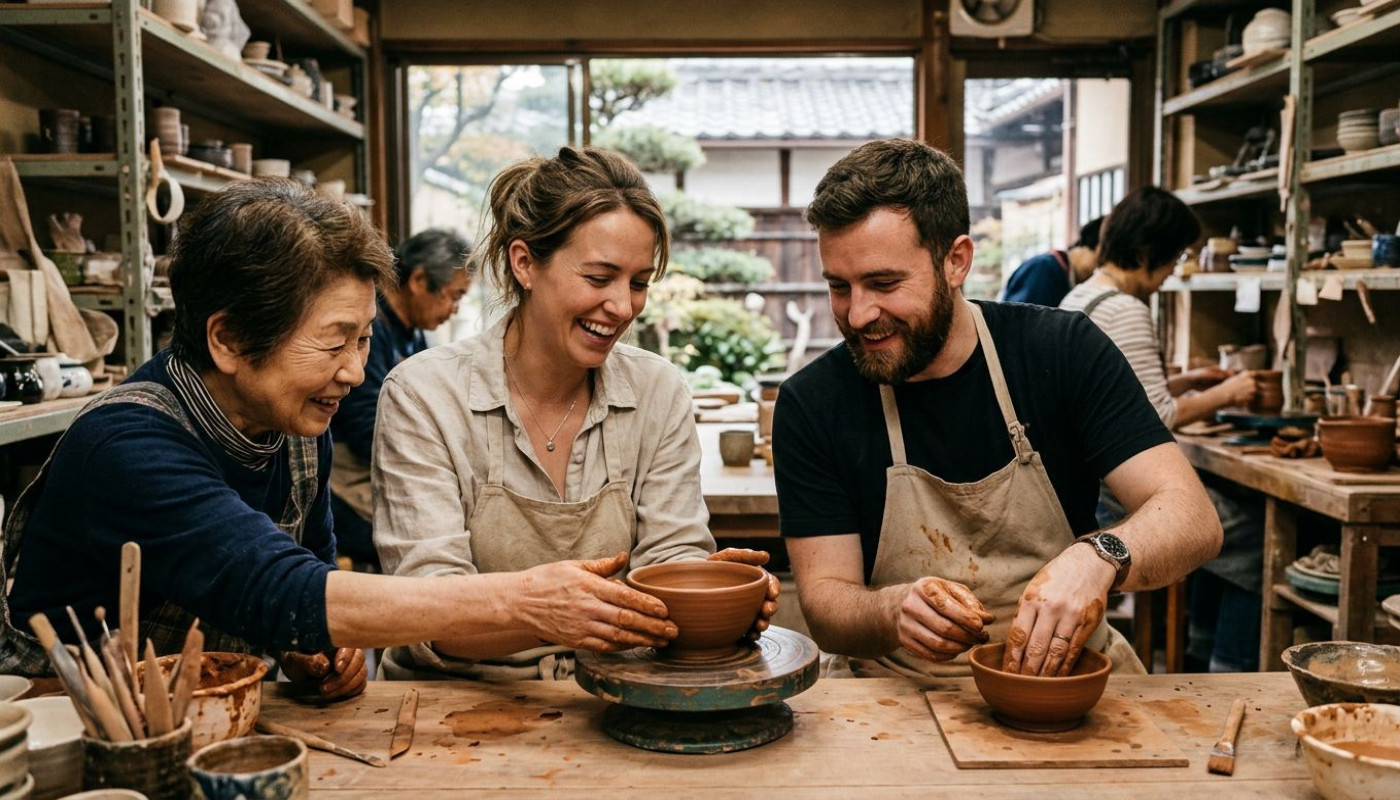
Then comes participation, and not the staged kind. Travelers are gravitating toward workshops where the outcome is not a souvenir but a skill, or at least an appreciation for effort: learning how to shape dough, understanding why a particular textile pattern matters, or recognizing the labor behind a traditional instrument. Even short experiences can be designed this way. A market visit, for example, can be little more than grazing, or it can become a lesson in seasonality, supply chains, and household budgeting, and the difference is the guide’s intent and preparation. In cities with layered histories, the strongest activities weave past and present together, showing how empires, migration, and economic transitions still shape what is on the table today.
Technology is also quietly changing what “activity” means. Translation apps reduce friction, digital ticketing helps manage flow, and mapping tools allow travelers to explore beyond the central grid, yet tech can either deepen understanding or flatten it. A self-guided audio walk can be powerful if it is written like reportage, grounded in interviews and archival detail, and respectful of neighborhoods, but it can also become another passive consumption channel if it is optimized solely for clicks. The more interesting trend is hybrid: local creators using digital tools to tell precise stories, and travelers using those tools to prepare better questions before they arrive.
Choosing experiences that feel genuinely local
So how do you separate substance from marketing? Start with transparency. Serious operators are clear about group size, pacing, accessibility constraints, what is included, and where the money goes, and they do not hide behind vague claims of authenticity. Look for activities that name the neighborhoods and explain why they matter, that cite local institutions or craftspeople, and that avoid exploitative “poverty tourism” framing. Pay attention to whether the itinerary includes time for interaction that is not transactional, such as a conversation with a craftsperson about how the work survives in a modern economy, rather than a rushed stop designed to trigger purchases.
Next, consider how the experience handles sensitive sites and living communities. If an activity includes religious spaces, memorials, or minority neighborhoods, the description should signal basic cultural competence, including rules on photography and behavior, and a willingness to address hard history. A guide who can talk about contemporary debates, not just ancient timelines, is more likely to deliver a meaningful connection. Reviews can help, but read them for content rather than star ratings: do people mention learning something specific, feeling welcomed, or understanding the city differently afterward?
Finally, align the activity with your own intentions. If you want deeper cultural connection, choose formats that force you to slow down: longer walks with fewer stops, workshops, neighborhood-focused storytelling, and small-group routes that avoid peak congestion. In places where local expertise makes a major difference, curated providers can help you find experiences that are built around context and conversation rather than crowd logistics. For travelers looking at Bulgaria’s capital, for instance, curated city experiences and private walks are often designed to unpack the layers of Roman, Ottoman, and Soviet-era history that still shape daily life, and practical options are easy to browse via https://www.sofia-escape.com.
How to plan it without overspending
Build your trip around one anchor experience per day, then leave space. A common budgeting mistake is stacking too many paid activities, which increases fatigue and reduces the chance of spontaneous connection, while also pushing you toward the most commercial options because they are easiest to book quickly. Pricing varies widely by city and format, but as a rule, small-group and private experiences cost more because they replace volume with attention; treat that premium as payment for time, research, and accountability rather than as a luxury add-on.
To keep costs under control, travel in shoulder season, book weekday time slots, and prioritize activities that combine multiple lenses, such as history plus food culture, or architecture plus political context. If you are traveling within Europe, also check whether your destination offers city cards, museum free days, or discounted public transport passes, and remember that many of the most culturally rich moments are low-cost: markets, neighborhood walks, and community events, provided you approach them with respect and curiosity. Book early for limited-capacity tours, set a clear per-day activity budget, and use cancellations policies to stay flexible.
On the same subject